Evidence preservation before it disappears
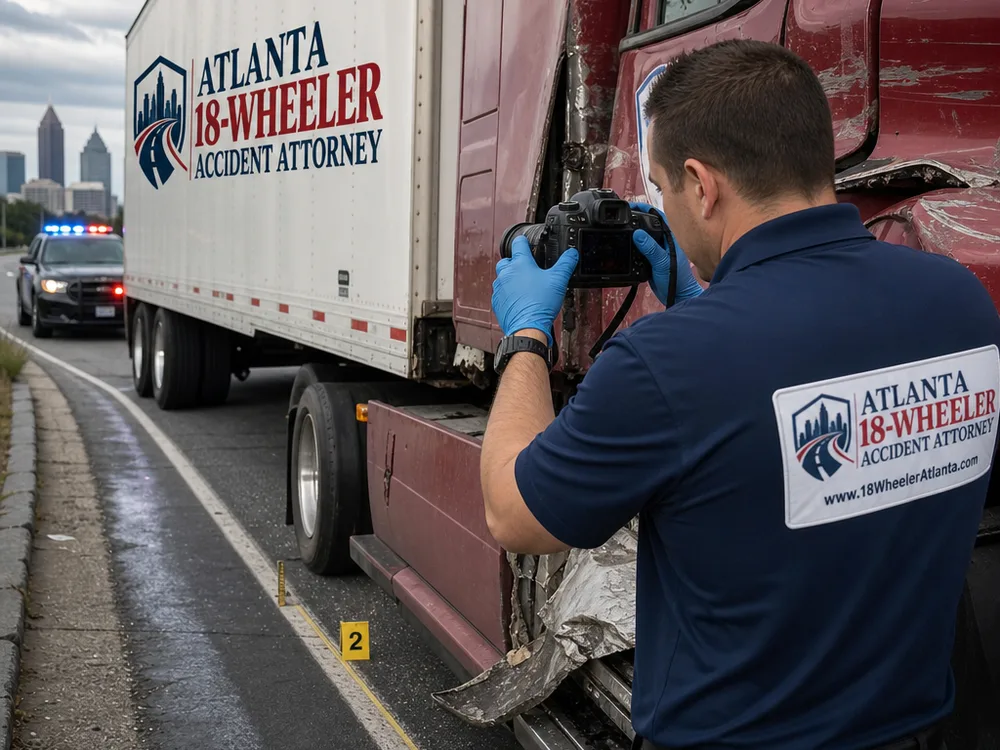
We act quickly to preserve driver logs, dispatch records, onboard data, maintenance history, and any available camera footage, because routine company retention schedules can overwrite key proof.
When a tractor-trailer crash upends your life, the details matter fast. We build evidence early, deal with trucking insurers, and pursue the full value of your injuries and losses.
A truck wreck is not a bigger version of a typical car crash claim. It involves commercial insurance layers, corporate safety rules, and evidence that can disappear quickly if no one moves to preserve it. Atlanta truck accident lawyers focus on the issues that make these cases harder: identifying every responsible party, locking down driver and carrier records, and documenting injuries in a way that holds up when an insurer argues your harm is “pre-existing” or “not that bad.”
Our team at 18-Wheeler Accident Attorney approaches these claims with a practical plan: protect the evidence, understand how the collision happened, and present a clean damages story that makes sense to an adjuster, mediator, or jury.
Local note that matters: many serious truck crashes in Atlanta happen on high-volume corridors and interchanges where speed differentials and lane changes are constant. When the crash scene is on I-75, I-85, I-20, or the Downtown Connector, we look closely at traffic flow, merging patterns, and whether a commercial driver was making unsafe decisions under pressure.
If your injuries came from a passenger-vehicle collision rather than a commercial truck, the legal approach can be different. Some people start by speaking with an Atlanta car accident attorney and then pivot if a commercial carrier is involved.
We act quickly to preserve driver logs, dispatch records, onboard data, maintenance history, and any available camera footage, because routine company retention schedules can overwrite key proof.
A tractor-trailer claim may involve the driver, the motor carrier, a trailer owner, a shipper or broker, a maintenance vendor, or a parts manufacturer. We investigate beyond the driver to find every coverage source.
Hours-of-service limits, inspection requirements, and driver qualification rules matter only if they connect to what happened. We translate compliance failures into clear causation arguments.
We coordinate the records timeline so diagnoses, treatment, restrictions, and future care needs are documented in a way that matches what insurers and defense counsel attack.
We build the claim around wage loss, reduced earning capacity, out-of-pocket costs, pain and suffering, and the real day-to-day limitations that follow serious orthopedic or traumatic injuries.
Commercial trucking cases turn on mechanics and documentation. A strong claim often comes down to what you can prove, not what everyone suspects.
We frequently investigate:
We also look at where the crash happened and why it matters. A wreck near Midtown can involve dense merging and short decision windows; Buckhead and Perimeter-area routes can add complex interchange geometry; collisions near the airport area can involve heavy commercial traffic and tight delivery schedules. Those context details help explain why a professional driver should have slowed down, left more space, or waited to merge.
If you are unsure whether a commercial vehicle counts as a “truck case” for liability and insurance purposes, an Atlanta truck accident lawyer can usually confirm that quickly once the carrier and policy type are identified.
Each stage preserves the record, develops liability, and documents the full effect of the collision.
Discuss Your Case With UsWe start with the basic facts, your injuries, and the vehicles involved. Then we prioritize evidence preservation and insurance notice steps that protect your claim while you focus on treatment.
We gather crash reports, witness information, scene details, medical records, and commercial records. When needed, we consult qualified experts to analyze impact dynamics, trucking operations, and causation.
We document medical expenses, wage loss, and future needs, then organize the narrative of how the injuries affect work, family responsibilities, and daily function.
We present a demand supported by evidence and negotiate with the insurer and defense counsel. If responsibility is contested, we build the case as if it will be tried.
If negotiations stall, we file suit and handle discovery, depositions, motions, and mediation. Trial preparation continues throughout so you are not pressured into an undervalued result.
The value of a truck crash case depends on your injuries, your recovery path, and what the evidence shows about fault. In Georgia personal injury claims, compensation commonly includes medical bills, both past and future, lost income, reduced earning capacity, and non-economic damages such as pain and suffering.
In catastrophic injury situations, damages analysis becomes more detailed. Future care may involve surgery, rehabilitation, durable medical equipment, home modifications, and long-term limitations that affect work options. In wrongful death cases, there are separate categories of damages under Georgia law, and timing and documentation become especially important.
Insurers often try to narrow the claim to the first emergency visit and a short course of therapy. Our job is to document the full medical story, connect it to the collision forces, and show how your daily life changed. That includes the unglamorous details: missed workdays, inability to lift or drive comfortably, sleep disruption, and the way pain alters normal routines.
If you have already been contacted by a trucking insurer or a third-party administrator, be careful with recorded statements. What feels like a routine conversation can become a tool to minimize your injuries or shift fault. Getting advice early helps you avoid unforced mistakes.
If you were hurt in a tractor-trailer crash in Atlanta, getting an experienced attorney involved early can protect key evidence and keep the claim on track before the trucking company controls the narrative.
Call Now (678) 379-6657Share what happened and where you are in treatment. We will outline the next steps, explain how commercial claims work in Georgia, and help you protect your case from early insurer pressure.